
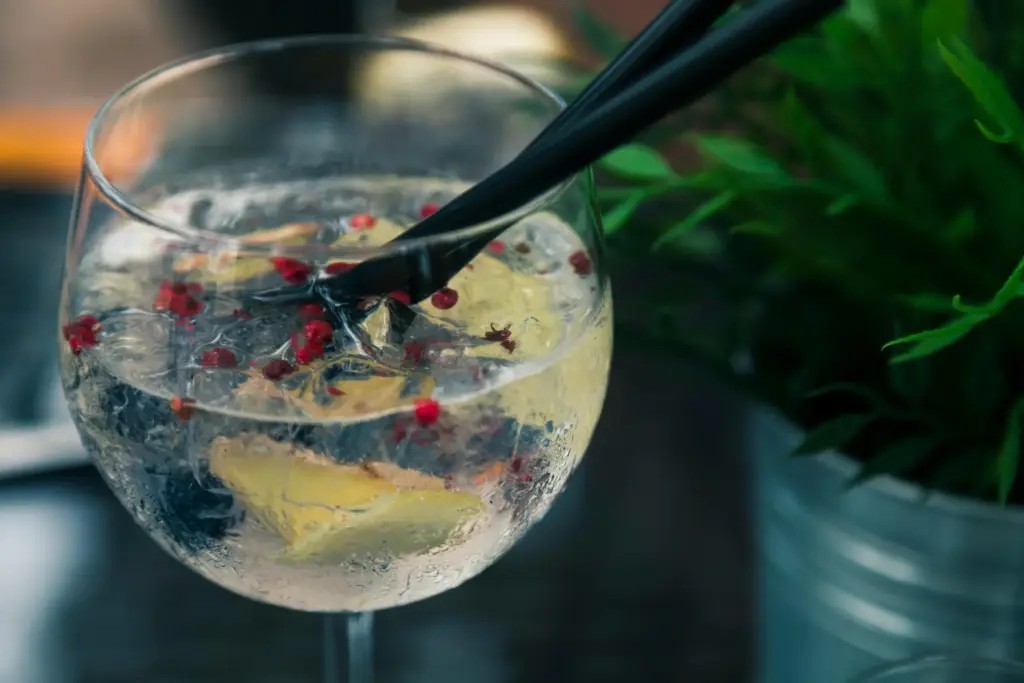
As a matter of law, it is entirely clear that only meat may be described as meat. But can a sausage not also be made from other ingredients? The issue concerns consumer expectations and the question whether those expectations are disappointed, for example, where a schnitzel is made from cauliflower rather than pork, veal or poultry. The legal starting point is the possible misleading of consumers.
In October 2025, the European Parliament therefore resolved that terms such as schnitzel, sausage and burger should in future be reserved for products of animal origin. The proposal has not yet completed the legislative process, and understandable opposition has been voiced. Is it not the case that consumers are now accustomed to terms such as veggie burger and that there is no longer any real risk of consumers being misled? Precisely because that question can probably be answered in the affirmative, a new rule is now to be introduced. It would then no longer be necessary to rely on the general prohibition of misleading practices in order to justify a prohibition on the term veggie schnitzel.
Very recently, the Court of Justice of the European Union, in its judgment of 13 November 2025 in Case C-563/24, following a reference from the Regional Court of Potsdam, had to decide whether non-alcoholic gin may exist. The CJEU’s answer, unsurprisingly, was no. A drink may only be called gin if it is in fact gin. And gin is only gin if the drink contains alcohol, more precisely at least 37.5% vol.
A manufacturer had advertised its non-alcoholic product, which tastes like gin, as “non-alcoholic gin”. That designation has now been prohibited.
Why is the decision unsurprising?
Unlike the position, at least so far, in relation to schnitzel, burger and sausage, there is a statutory provision specifying the characteristics a drink must have in order to be called gin. This is laid down in the Spirit Drinks Regulation, Regulation (EU) 2019/787. According to that Regulation, gin is:
“a juniper-flavoured spirit drink produced by flavouring ethyl alcohol of agricultural origin with juniper berries (Juniperus communis L.). The minimum alcoholic strength by volume of gin shall be 37.5%. Only flavouring substances or flavouring preparations or both may be used in the production of gin so that the taste is predominantly that of juniper. The term ‘gin’ may be supplemented by the term ‘dry’ if the content of added sweetening products does not exceed 0.1 grams of sweetening products per litre of the final product, expressed as invert sugar.”
In addition, Article 10(7) of the Spirit Drinks Regulation provides, in simplified terms, as follows.
The legal names prescribed by the Regulation, such as gin, may not be used in the description, presentation or labelling of drinks which do not meet the requirements for the relevant categories. That prohibition also applies where such legal names are used in conjunction with words such as “style”, “type”, “à la”, “method”, “make”, “flavour” or other similar terms.
The CJEU treats the designation “non-alcoholic gin” in the same way as if the product had been advertised as a “gin-flavoured drink”. According to the clear wording of the provision, that is not permitted. Apart from its taste, the product does not satisfy any of the requirements applicable to gin.
The Regional Court of Potsdam also had no difficulty prohibiting that product designation when applying the provision. However, it had expressed concerns as to whether the provision might be invalid in light of the freedom to conduct a business enshrined in Article 16 of the Charter of Fundamental Rights of the European Union. The CJEU found no basis for such concerns.
For the time being, an internet search still produces many results for “non-alcoholic gin”. That is now likely to change rather quickly.